- Renovation Planning
- Furniture
- Floor Protection
- Hardwood Installation
- Montgomery County
- Maryland
Floors First or Furniture First? A Maryland Renovation Sequencing Guide

Quick insights
- Floors go in before furniture. Nearly always. Sanding dust gets into everything, a sander needs an empty room to reach the walls, and a floor installed around furniture leaves you with a seam, a transition, or a color mismatch you will look at for twenty years.
- But the furniture decision comes first of all. Stain color, plank width, and sheen are chosen against the sofa, the rug, and the cabinetry — not in a vacuum. Lock the palette before the sander arrives, because changing your mind afterward is a $4–$8 / sq ft re-sand, not a return.
- Walkable is not loadable. Oil-modified polyurethane takes roughly 30 days to fully cure; waterborne finishes land around 7–14 days. Light foot traffic comes back in 1–2 days, furniture in 3–5, and area rugs last of all — a rug laid over uncured finish traps solvent and prints its own outline into the floor.
- Dents come from pressure, not weight. A 180 lb person in stilettos puts more force on one point than a 900 lb piano on four broad casters. Narrow metal or plastic feet are the real enemy; the fix is wide felt or a load-spreading glide, not a lighter sofa.
- Most scratches happen in one 48-hour window: delivery day. Dragged legs, grit under a dolly wheel, and “let's just slide it over to see how it looks” account for more fresh-floor repairs than the next six months combined.
- Species and finish change the math. Red oak sits at 1,290 lbf on the Janka scale, white oak at 1,360, American cherry at just 950, hickory at 1,820. A cherry or pine floor will take an impression from furniture that a hickory floor shrugs off.
- Exception worth knowing: in a kitchen, run the floor under the cabinets and appliances where the budget allows — it is cheaper now than after, and it saves you when a dishwasher comes out in year eight.
The short answer, and the part people miss
We get asked this on roughly half our estimates, usually by someone standing in an empty room with a tape measure and a browser tab full of sofas: do I do the floors first or the furniture first?
The answer is the floor, almost every time. An installer or a sander needs an empty room to work corner to corner, sanding dust finds its way into upholstery and speaker grilles no matter how well we seal a room, and a floor laid around existing furniture leaves you with seams, filler strips, and a color break that never quite disappears.
But that is only half the sequence, and the half people skip is the one that costs money. The furniture decision comes before everything. Stain color, plank width, and sheen are relationships, not standalone choices — they are judged against the sofa, the rug, the cabinets, and the light in that specific room. Changing your mind about the floor after the furniture arrives is not a return; it is a $4–$8 per square foot re-sand, a week out of the house, and another thickness taken off a floor that only has so many sandings in it.
So the real order is: decide the furniture → install the floor → cure the floor → move the furniture in. The rest of this guide is each of those steps, with the numbers.
Why the floor goes in first
Four reasons, in the order they cost you money.
1. Dust travels, and it never fully comes out of fabric
Modern dust-containment sanders capture most of what they make, and we seal doorways and cover HVAC returns on every job. “Most” is not “all.” Fine wood dust is abrasive and it settles into upholstery weave, mattress ticking, bookshelves, and the vents of anything with a fan. A new sofa in the room during a sanding is a new sofa you will be cleaning for a month.
2. A sander cannot reach what furniture is standing on
Edgers and buffers need to run tight to the baseboard on all four walls. Working around a sectional means sanding half a room, moving everything, and sanding the other half — and the overlap between two sanding sessions on a floor that has started to dry is visible under a raking light forever. We will not do it, and you should be wary of anyone who offers.
3. Installation needs continuous runs
New hardwood goes down in long, unbroken runs with racked seams and a consistent expansion gap at every wall. Install around an immovable object and you inherit a break in the field, a filler row, or a transition in the middle of a room that no amount of good carpentry makes invisible.
4. Finish cures from the top down, and air has to reach it
Polyurethane hardens by evaporation and cross-linking, and that needs airflow across the whole surface. Anything sitting on a fresh floor — furniture, a drop cloth, a rug — is a lid. See the cure timeline below for what that means in days.
The exceptions: when something else goes first
Sequencing is not religion. Four cases where we change the order:
- Kitchen cabinets. In a full kitchen renovation, run the hardwood under the cabinet boxes and the dishwasher bay if the budget allows. It is cheaper during the install than after, it kills the height step if the cabinets ever change, and it means an appliance can be pulled out in year eight without catching on a lip. The usual exception is a floating floor, which needs room to move and therefore stops at the cabinet toe kick.
- Permanent built-ins and islands. Anything bolted to the subfloor is architecture, not furniture. It goes in first and the floor works around it.
- Paint and trim. Paint walls before the floor, or at minimum get the messy coats on. Cutting in baseboard above a three-day-old finish is a tense afternoon for everyone involved.
- Stairs mid-project. If we are doing a carpet-to-hardwood stair conversion alongside a floor, the stairs are the last thing finished, because they are the only route between levels. See our stair conversion guide for how we stage that.
The cure timeline: walkable is not loadable
This is the single most misunderstood thing in our trade, and it is responsible for more avoidable damage than every pet and every dropped pot combined. A finish that feels dry to the touch is nowhere near cured. Dry means the solvent has flashed off the surface. Cured means the film has finished cross-linking and reached full hardness and chemical resistance. Those are different events, days or weeks apart.
Our working schedule, which is what we tell every customer and what we write on the invoice:
Typical schedule for a residential refinish. Cold, humid, or poorly ventilated rooms run slower.
Three notes that matter more than the table. First, Maryland weather moves these numbers. A humid August week in Silver Spring slows a waterborne finish noticeably; a sealed-up January house with the heat running dries the surface fast and the film underneath slowly. We would rather push your furniture delivery by two days than hand you a floor that prints.
Second, rugs are genuinely last. A rug over an uncured finish traps the solvent that still needs to leave, and you get a cloudy, soft, sometimes permanently discolored rectangle in exactly the most visible part of the room. We have been called out to re-sand floors for this specific mistake more than once.
Third, when furniture does come back, it gets carried, not slid, and the felt pads go on before the piece lands on the floor, not after it is in position.
The decisions that have to be locked before the sander arrives
Here is where the sequence reverses. You install the floor before the furniture arrives, but you choose the floor knowing what the furniture will be. Four calls, none of which are cheap to undo:
Undertone, which is the one people get wrong
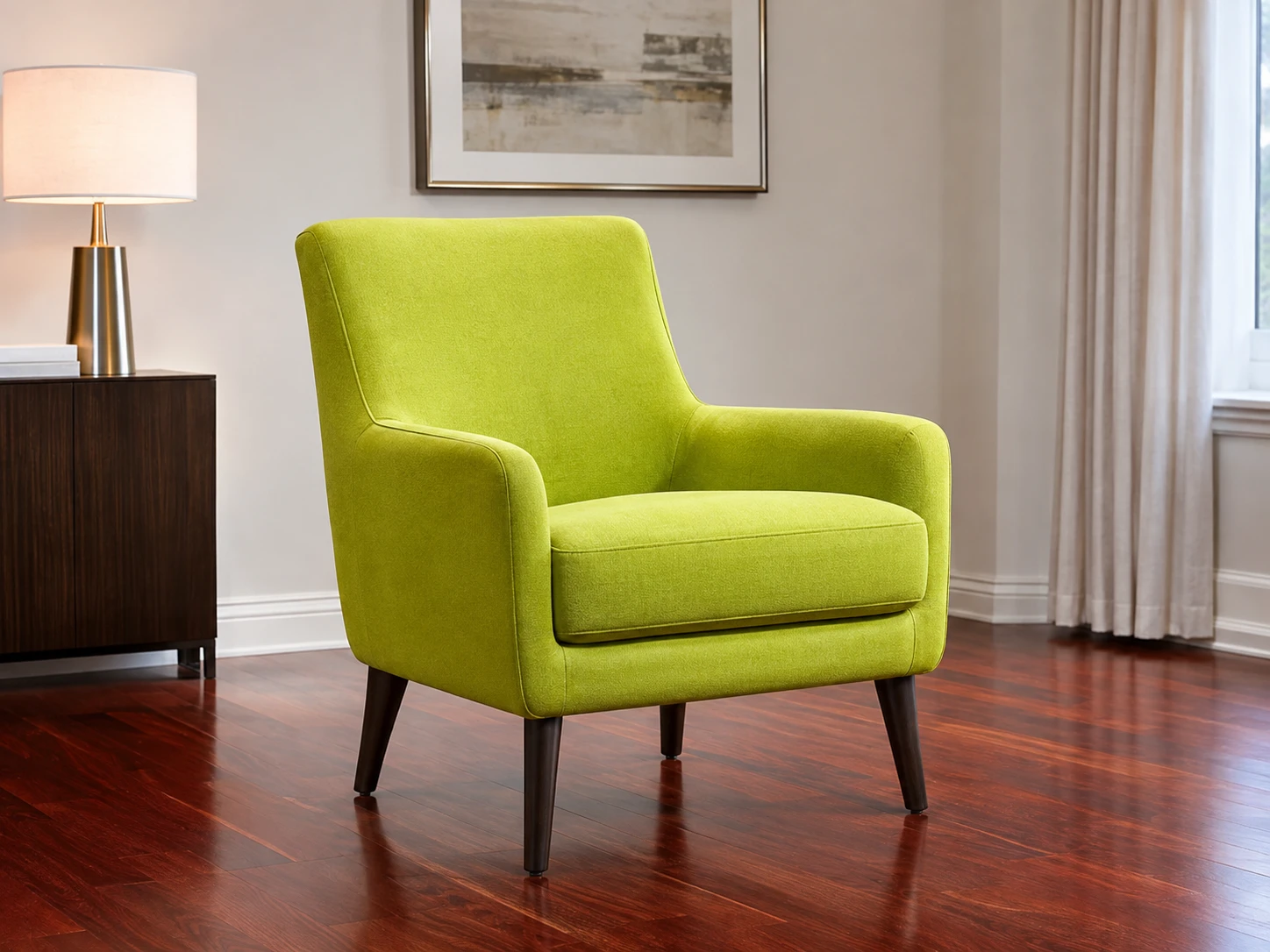
Red oak — the species under most Maryland houses built between 1940 and 1995 — has a pink-to-red undertone that is still faintly visible through almost any stain. Put a cool gray sectional on a warm red-oak floor and the floor reads orange, every time, no matter how neutral the stain looked on the sample board. White oak runs cooler and takes gray and greige tones honestly. American cherry darkens significantly with UV exposure over the first year or two, which means the floor you approve is not the floor you will have in 2029.
Value contrast against the big pieces
The sofa and the floor are the two largest color fields in the room. Too close in value and the furniture dissolves into the floor; too far apart and every piece looks like it is floating on a stage. This is judged at room scale, which is precisely what a 6 × 6 inch stain sample cannot show you.
Plank width against furniture scale
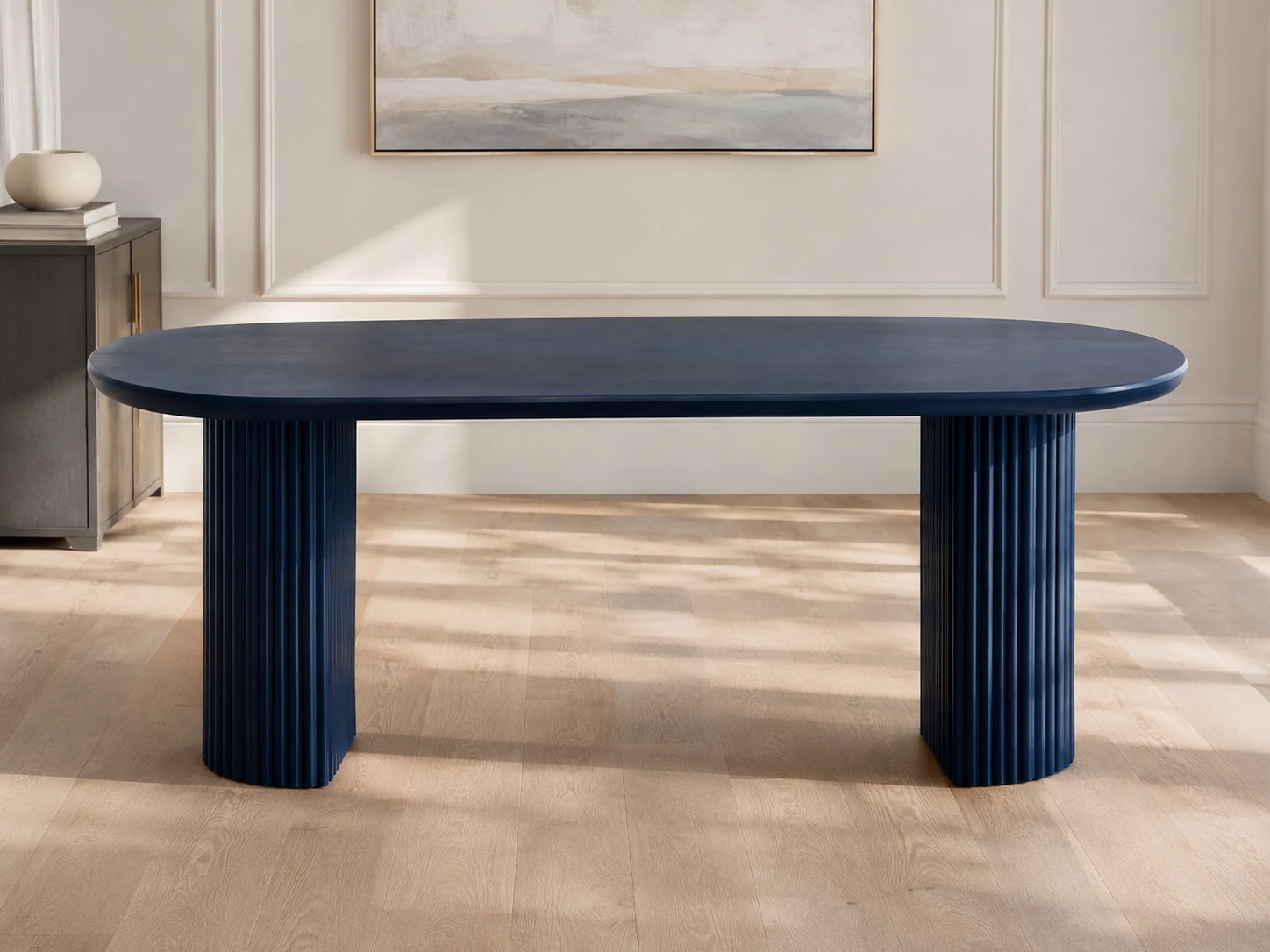
Wide plank (6–9 inches) reads calm and modern and makes a room feel larger, but it also means fewer, longer lines — which can fight a room full of small-scale furniture. Narrow strip (2¼ inches) is busier underfoot and suits traditional Montgomery County colonials and bungalows. Neither is better; they just have to agree with what is sitting on them.
Sheen against how much you actually clean
Satin hides scratches, dust, and pet traffic. Semi-gloss and gloss bounce light beautifully in a staged photo and show every scuff from a chair leg within a month. In a house with furniture that moves — dining chairs, an office chair, a coffee table that gets pushed aside — satin is almost always the right call.
How to actually make these calls without guessing
The traditional process is three stain samples brushed onto your subfloor in a dusty room, judged against a fabric swatch you are holding in your other hand. It is better than nothing, and it is still the main reason people second-guess a floor after the furniture lands.
What has changed is that you can now see the finished room before anyone sands anything. Furniture visualization studios — DesignYuv is one that works in this space — build photoreal 3D renders of a specific piece in a specific room, which means you can put your actual sofa on your actual floor color, at scale, under your room's light, and look at it on a screen instead of imagining it. Swap the stain, swap the plank width, see what the undertone does to the upholstery.
We are a flooring contractor, not a rendering studio, and we have no stake in which tool you use. But we will say this plainly: every re-sand we have ever done for “I just don't like the color with the furniture” was preventable at the planning stage, and seeing the room at full scale before committing is the cheapest insurance in the whole project. The render costs a fraction of one square foot of re-sanding.
It solves a second problem too. Visualizing the layout to scale means the sectional gets placed once, in the right spot, rather than dragged across a three-week-old finish three times while everyone decides where it goes. Which brings us to delivery day.
Delivery day: the 48 hours where the damage actually happens
In our repair log, fresh-floor damage clusters hard around furniture delivery. Not year three. Not the dog. Delivery day, and the day after.
What we tell homeowners to have ready before the truck arrives:
- A protected path, taped at the seams. Ram board or heavy builder's paper from the entry door to the room, taped so it cannot shift underfoot. Not plastic sheeting — it traps moisture against a curing finish and it is dangerously slick on wood.
- A swept path. The grit is what cuts. A single piece of driveway gravel under a dolly wheel will carve a line across a room in one pass, and no amount of careful lifting undoes it.
- Felt pads already in the house. Wide felt — at least as wide as the foot it is going under — applied before the piece is set down. Buy the thick commercial felt, not the thin adhesive dots, which compress flat in a month and then act as sandpaper discs.
- A decided final position. Marked with painter's tape on the floor if necessary. Every repositioning is another chance to drag.
- An explicit conversation with the delivery crew. They are paid by the stop, and sliding is faster than lifting. Say it out loud before they start: this floor is new, nothing gets slid.
- Boots off or booties on. Especially November through March in Maryland, when road salt comes in on every sole and leaves a white haze that cleaner will not lift. Our winter floor guide covers the salt problem in detail.
One more, for appliances and anything on a hand truck: lay down a sacrificial sheet of ¼ inch hardboard along the route. It spreads the wheel load across a wide area instead of two narrow contact points carrying 300 pounds.
What actually dents wood: pressure, not weight
The common fear is heavy furniture. The real culprit is concentrated pressure — force divided by contact area. A 900 lb upright piano on four broad casters distributes its load across a usefully large footprint. A 160 lb person in a stiletto heel concentrates force into a few square millimeters and will leave a dent in white oak. The piano is usually fine; the shoe is not.
Which means the fix is almost never a lighter piece of furniture. It is a wider foot.
Species hardness, for reference
The Janka hardness test measures the force needed to embed a steel ball halfway into a wood sample — a direct proxy for dent resistance. Common Maryland floors:
Janka ratings per the NWFA species reference. Engineered floors take the rating of their wear-layer species.
Janka describes the wood. The finish on top of it is a separate variable: an aluminum-oxide factory finish resists surface scratching better than a site-applied poly, while a site finish is repairable in place. Neither one stops a point load from crushing the wood fiber underneath.
The practical rules
- Wide, flat glides beat small casters under anything heavy and stationary. Casters are for things that roll on purpose.
- Felt, not plastic or rubber. Hard plastic glides pick up grit and become cutting tools. Some rubber compounds can react with a polyurethane finish and leave a stain.
- Inspect and replace pads twice a year. A felt pad that has worn through to its adhesive backing is actively damaging your floor.
- Rotate heavy pieces slightly, seasonally. It lets compressed wood fiber recover and prevents a permanent four-point impression.
- Office chairs get a mat or soft wheels. A rolling task chair on hard casters is the fastest-wearing thing most people put on a wood floor.
- Shallow dents are often recoverable. A compression dent in wood fiber — as distinct from a gouge that has cut fiber — can sometimes be steamed back up. If it happens, call before you sand anything: see repair & restoration.
Rugs: the pad protects, or the pad ruins it
An area rug is the best floor protection you can buy for a high-traffic path, and the pad underneath it is the single most common cause of mystery finish damage we are called to look at.
- Use felt, or felt with a natural-rubber grip layer. These are breathable and chemically inert against a cured polyurethane film.
- Avoid solid PVC, vinyl, and the cheap latex waffle pads. Plasticizers in these can migrate into the finish over months or years and leave a cloudy, gummy, or yellowed patch in the exact shape of the pad. It does not clean off; it sands off.
- Wait out the cure. Two weeks after a waterborne finish, a full 30 days after oil-modified. This is not caution for its own sake — it is the single easiest way to ruin a new floor.
- Move rugs a few inches each season. Wood photo-oxidizes under UV, and a rug that has not moved in five years leaves a sharply defined lighter rectangle when it finally does. Cherry and American walnut shift fastest.
- Shake the rug out, do not just vacuum it. Grit works its way through the pile to the floor and grinds under foot traffic.
A working sequence, week by week
This is the schedule we build with homeowners who are furnishing and flooring at the same time. Compress it if you have to; just do not reorder it.
- Weeks 1–2 — Decide. Choose the furniture, the rug, and the wall color. Visualize the room at scale. Get stain samples applied to your floor in your light and look at them at 8 a.m. and again at 8 p.m. Lock the floor spec against the furniture, not against a showroom.
- Week 2 — Order, and ask the lead time. Upholstery is routinely 8–16 weeks. Find that number out now, because it determines whether the floor waits for the sofa or the sofa waits for the floor. Where we can, we would rather the floor finish first and sit empty.
- Week 3 — Prep. Paint and trim. Clear the room completely. For new installation, the wood acclimates in the house at normal living conditions — this is not optional in Maryland, where indoor humidity swings hard between seasons.
- Week 4 — Install or sand. 2–5 days for a typical refinish, longer for new install plus finish.
- Week 4–5 — Cure. Keep the room empty and ventilated. Resist the urge to move in early. This is the week the whole project is won or lost.
- Week 5 — Furniture in. Protected path, felt pads attached first, lifted not slid, placed once.
- Week 6–8 — Rugs down. Felt pad. Final layout.
If your sofa lead time blows past the floor schedule, finish the floor anyway and live around it. An empty room curing for six weeks is a free outcome. A floor rushed into service because the furniture showed up early is a repair bill.
When to call us, and what we will actually do
Call before you order the furniture, not after. On an estimate visit we will gauge the remaining thickness of an existing floor before anyone promises a sanding, meter the wood and subfloor, tell you honestly whether you are looking at a refinish or a replacement, and build the schedule backwards from your delivery dates so the cure window is real rather than optimistic.
And if a floor is already damaged — a dragged sectional, a gouge from a delivery dolly, a cloudy rectangle where a rug pad sat — it is usually a spot repair and a blend, not a whole-house re-sand. Send us a photo before you try anything from a hardware store.
Call (240) 343-3514 for a free in-home estimate. Start with the service you need — installation, refinishing & sanding, repair & restoration, water damage repair, luxury vinyl plank & tile, or stairs — or go straight to your town: Bethesda, Rockville, Silver Spring, Chevy Chase, Potomac, North Bethesda, Olney, Germantown, Clarksburg, Takoma Park, Cabin John, Annapolis, Frederick, Fulton, Clarksville, or Upper Marlboro.
Sources
- National Wood Flooring Association — Janka hardness species reference, acclimation and moisture-content guidance, and the 30–50% relative humidity service environment for wood flooring.
- DesignYuv — furniture visualization and photoreal 3D room rendering, referenced above as one way to evaluate furniture against a floor color at full room scale before committing.
Cure-timeline figures, delivery-day practices, and the furniture-damage patterns described above reflect our own field experience across Montgomery, Howard, Anne Arundel, Frederick, and Prince George's counties. Manufacturer cure schedules vary — always follow the data sheet for the specific finish on your floor.
Frequently asked questions
Should I install hardwood floors before or after buying furniture?
Install the floor first, then move furniture in. A sander or installer needs an empty room, sanding dust penetrates upholstery and electronics, and a floor laid around furniture leaves permanent seams and color mismatches. The one thing that should happen before the floor is the furniture decision — choose your stain and plank width against the sofa, rug, and cabinetry you intend to live with.
How long after refinishing can I put furniture back on hardwood floors?
Light foot traffic in socks is usually fine after 24 to 48 hours. Furniture can come back at roughly 3 to 5 days, lifted and carried rather than slid, with felt pads already attached. Area rugs go down last — 2 weeks for a waterborne finish and up to 30 days for oil-modified polyurethane — because a rug traps curing solvent and can print its outline into the finish.
Will heavy furniture dent my hardwood floor?
Weight matters less than how it is distributed. A heavy piece on wide, flat, felted feet spreads its load and rarely dents; a lighter piece on narrow metal or hard plastic feet concentrates pressure into a few square millimeters and will leave impressions, especially on softer species like American cherry or pine. Use wide felt pads, flat glides instead of small casters under heavy items, and rotate furniture slightly twice a year.
Do rugs damage hardwood floors?
Rugs themselves do not, but two things about them can. Solid rubber or PVC-backed pads can react with a polyurethane finish over time and leave a cloudy or discolored patch, so use a felt or natural-rubber pad instead. And a rug left in one place for years shields the wood from UV light, so when it moves you get a visible lighter rectangle. Move rugs a few inches seasonally and keep direct sun off unshaded areas.
Should flooring go under kitchen cabinets?
Where the budget allows, yes. Running the floor under the cabinet boxes and the dishwasher bay costs less during the install than retrofitting later, prevents a visible height step if you ever change the cabinets, and means an appliance can be pulled out for service without catching on a transition. Islands and permanent peninsulas are the usual exception for floating floors, which need room to move.
How do I protect hardwood floors on furniture delivery day?
Lay a protective path from the door to the room — ram board or builder's paper taped at the seams, not plastic sheeting, which traps moisture and is slick underfoot. Sweep the path first, because the grit under a dolly wheel does the cutting. Have felt pads attached before the piece lands, carry rather than drag, and plan the final position in advance so nothing gets slid around twice.