- Fire Systems
- Water Damage
- Floor Protection
- Property Management
- Hardwood Repair
- Maryland
When the Fire System Goes Off: Sprinkler Water and Extinguisher Residue on Hardwood Floors
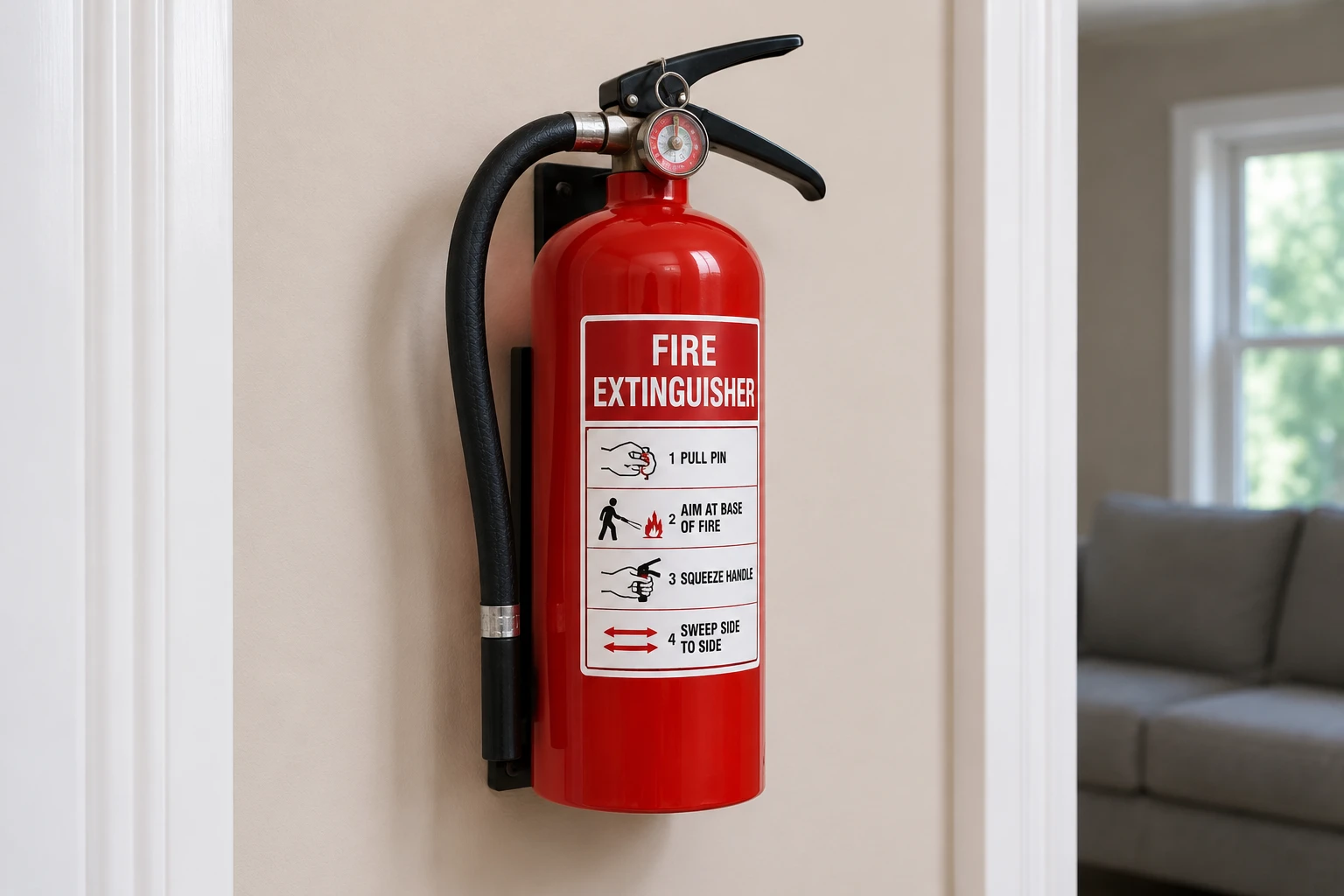
Quick insights
- Most sprinkler discharges are not fires. Freeze-ups in unheated spaces, mechanical impact on a head, corrosion pinholes, and manufacturing defects account for the large majority of accidental activations. In Maryland the dominant cause is a January freeze in an attic, a vacant unit, or an unheated stairwell.
- One head puts out roughly 15–25 gallons per minute and keeps flowing until someone closes the control valve. Ten minutes before the riser gets shut is 150–250 gallons landing on one area of floor — comparable to a supply line failure, concentrated in a smaller footprint.
- The 48-hour rule governs. Water sitting on finished hardwood for under about two days is usually a drying job. Past that, it migrates into the subfloor and the board edges swell permanently, and you move from drying to board replacement.
- ABC dry-chemical residue is not inert dust. Monoammonium phosphate is mildly acidic and hygroscopic — it pulls moisture from the air and turns into a corrosive paste. On wood it etches the finish, and it is abrasive, so walking through it grinds it into the surface.
- Never add water to dry-chemical residue. Wet-wiping it is the single most common way a recoverable floor becomes a refinish. Vacuum dry first, then clean.
- Class K wet-chemical residue — the kitchen-hood and restaurant extinguishers — is strongly alkaline and will darken and strip a polyurethane finish quickly. Commercial kitchens with wood floors in the adjacent dining room should treat this as urgent.
- It is usually a water claim, not a fire claim. Accidental sprinkler discharge is typically covered under the water-damage provisions of a homeowner or commercial policy — which matters, because the documentation your adjuster wants is moisture readings, not char photos.
The call we actually get
It is rarely a fire. It is a property manager in Silver Spring on the second Monday in January, or a homeowner in Germantown who came back from a week away, and the sentence is some version of: a sprinkler head let go and nobody was here.
Fire-protection systems save lives and property, and the arithmetic on that is not close. But the same system that puts out a fire is also a pressurized water line running through your ceiling, and when it opens without a fire underneath it, what you have is a plumbing failure with excellent aim. The floor does not know the difference.
This guide covers what we see on wood floors after a fire system operates — sprinkler water and extinguisher residue both — what to do in the first 48 hours, and what it costs. It is the companion to our water-damaged floor repair work, because mechanically, that is exactly what this is.
Why fire systems discharge when there is no fire
Worth understanding, because it tells you where the risk sits in your building.
First, a correction to the thing everyone learns from films: sprinkler heads do not all go off at once. Each head is held closed by a glass bulb or a fusible link that opens at its own temperature, typically 135–165°F for residential and light-hazard heads. A real fire opens the one or two heads directly above it. A system that dumps everywhere is a system that has failed, not a system responding to smoke — and smoke does not trigger sprinklers at all. Only heat does.
The accidental activations we see, in rough order of frequency in Maryland:
- Freezing. The dominant local cause by a wide margin. Water in a wet-pipe system expands as it freezes and splits the pipe or forces a head. The risk sits in attics, garages, unheated stairwells, exterior corridors, and — the classic — a vacant unit where someone turned the heat off to save money. Our winter guide covers what else a Maryland January does to wood.
- Mechanical impact. A ladder, a forklift, a mattress carried upstairs, a contractor working near a pendant head. Heads are not armored; a solid knock shears the bulb.
- Corrosion. Older steel piping develops pinholes, sometimes accelerated by microbiologically influenced corrosion. These usually leak slowly for a long time before anyone notices, which is its own flavor of bad for a floor below.
- Overheating. A head mounted too close to a heat source — a commercial oven line, a kiln, a space heater on a cold night, even a halogen fixture — reaching activation temperature on its own.
- Defective or recalled heads. Uncommon, but real, and the reason manufacturing date and model matter during inspection.
Notice how many of those are maintenance findings rather than accidents. That is the thread running through this whole piece.
The first 48 hours, in order
This window decides whether you are paying for drying or for a floor. Run it in this order.
- Shut the control valve. A head flows until the riser is closed — not until it “runs out.” Everyone responsible for a building should know where that valve is before they need it. Call the fire department first if there is any chance of actual fire; they will not thank you for shutting a system down during one.
- Get the standing water off the wood, now. Extraction in the first hours is worth more than anything that happens later. A wet-vac in the first thirty minutes outperforms a professional drying crew arriving at hour twelve.
- Lift rugs and pads immediately. They hold water against the finish and will print, stain, and in some cases permanently discolor the floor in under a day.
- Document before you clean. Photos wide and close, the time the discharge was found, the time the valve was closed, and — the one people skip — moisture meter readings. This is a water claim; readings are the currency.
- Air movement and dehumidification, not heat. Fans across the surface and a dehumidifier pulling the room down. Do not blast heat at a wet wood floor; you dry the surface, trap moisture underneath, and get the worst of both outcomes.
- Do not sand anything. Not for weeks. See below.
- Call a flooring contractor and your fire-protection contractor separately. They solve different halves and neither one does the other's job well.

What 200 gallons actually does to a wood floor
A finished hardwood floor is reasonably water-resistant across the face of a board and not remotely waterproof at the seams. Water finds the joints, gets underneath, and goes into the board edges and the subfloor — where there is no finish at all and nothing to slow it down.
Cupping
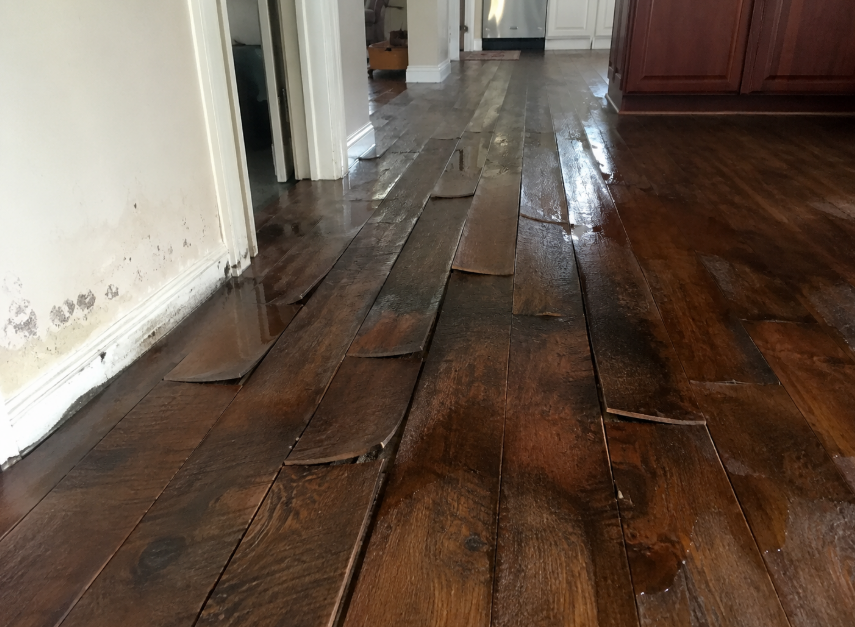
The first and most common symptom: board edges swell higher than the centers, because the underside is taking on more moisture than the sealed top. A cupped floor is usually recoverable with controlled drying. The critical rule is that you do not sand a cupped floor until it has dried back to its normal moisture content, which can take weeks. Sand it wet and you plane the raised edges flat; when the board finally dries and flattens, the centers sit proud — that is crowning, and fixing it costs a second sanding the floor may not have the thickness left to give.
Crowning
Centers higher than edges. Sometimes a drying-direction artifact, more often the signature of someone who sanded too early.
Buckling
Boards lifting clear of the subfloor, sometimes several inches. This is the end stage, and it means the floor has expanded past its expansion gap and had nowhere to go. Buckled sections are replaced, not dried.
The subfloor, which is the real question
The floor you can see is the cheap part. Plywood and OSB under a sustained soak delaminate and lose structural integrity, and OSB in particular swells irreversibly at the edges and does not come back. If the water sat, the subfloor has to be opened and assessed — and a soft, spongy, or deflecting area afterward is a subfloor problem wearing a hardwood costume. Our guide to sagging floors and subfloor damage covers how we evaluate that.
Mold, on a schedule
Wet cellulose in a closed cavity at room temperature is a growth medium, and the clock on that is measured in days, not weeks. This is the real reason the 48-hour rule is not contractor theater.

Extinguisher residue: the part nobody warns you about
A discharged extinguisher looks like a mess and a vacuum cleaner's problem. On a wood floor it is a chemistry problem, and the first twenty minutes of cleanup usually determine the outcome.
ABC dry chemical — the yellow powder in most buildings
The multipurpose extinguisher on the wall of nearly every hallway, office, and apartment is monoammonium phosphate with ammonium sulfate. Three properties matter for your floor:
- It is mildly acidic. Against a polyurethane finish over time it etches, dulling and clouding the surface.
- It is hygroscopic. It pulls moisture out of the air and becomes a sticky, corrosive paste. This is why it gets worse overnight if you leave it.
- It is abrasive. It is a fine hard powder. Every footstep through it is a pass with sandpaper.
What to do: keep everyone off it, vacuum dry with a HEPA vacuum, and only then clean with a neutral wood-floor cleaner. What not to do: mop it, wet-wipe it, or hit it with a damp cloth. Adding water activates the acidity and spreads a thin corrosive film across the whole floor instead of leaving it as a pile in one spot. We have seen a recoverable floor turned into a full refinish by a well-meaning hour with a wet mop.
Class K wet chemical — restaurants and commercial kitchens
Potassium acetate or citrate solutions, designed to saponify burning cooking oil. They are strongly alkaline, and alkalinity is specifically hostile to wood: it darkens the tannins in oak, degrades a polyurethane film, and raises the grain. In a restaurant with wood flooring in the dining room adjacent to the hood system, treat a Class K discharge as an immediate call, not a next-week item.
CO2 and clean agent — the good news
CO2 and clean-agent systems (Halotron, FM-200 and similar) leave no residue, which is exactly why they protect server rooms and archives. The only wood-floor concern is localized thermal shock from the discharge horn, and it is minor. If you have a choice of system in a space with a floor worth protecting, this is a real consideration.
Water mist and foam
Treat as a water event, with the first-48 playbook above. Foam agents add a surfactant film that needs a dedicated cleaning step before refinishing, or the new finish will not bond.
The system side: almost all of this is preventable
Here is the part we are not qualified to do, and will not pretend to be. We repair floors. We do not inspect, test, or certify fire-protection systems, and a flooring contractor who offers to look at your riser is a flooring contractor to be wary of.
But after enough of these jobs the pattern is impossible to miss: the discharge almost always traces back to something a scheduled inspection would have caught. A dry-pipe valve that was not winterized. An unheated corridor nobody put on the heat-maintenance list. Corroded piping that had been weeping for months. A head knocked out of alignment during a renovation and never looked at again. These are not freak events. They are deferred maintenance with a dramatic ending.
NFPA 25 is the standard that governs inspection, testing and maintenance of water-based fire protection systems, and it is what a qualified fire-protection contractor works to — weekly or monthly valve and gauge checks depending on system type, quarterly flow and alarm device tests, annual full inspections, and longer-cycle internal pipe assessments. For buildings with wood floors on the line, the items worth being pointed about:
- Freeze protection for every unheated space, verified before December rather than assumed. Dry-pipe or antifreeze systems where heat cannot be guaranteed.
- Physical protection on heads in corridors, storage rooms, garages and anywhere a ladder or a cart operates.
- Internal pipe condition assessment on older steel systems, before a pinhole finds it for you.
- A written shutdown procedure posted at the riser, so the person who finds the discharge at 2 a.m. closes the valve in ninety seconds instead of twenty minutes. On a floor, that difference is roughly 400 gallons.
If you are managing commercial or multifamily property and that program is not current, the people to call are fire-protection specialists — firms like Texas Fire Solutions in Houston, who handle sprinkler, pump, hydrant, alarm, extinguisher and backflow inspection, testing and maintenance for property management, healthcare, hospitality, retail and restaurant clients. We are in Maryland and they are in Texas, so there is no referral arrangement here and nothing in it for us; we are pointing at the category because the maintenance schedule is the actual fix, and we would rather you never need the rest of this article.
The division of labor is clean: they keep the system from discharging. We deal with the floor if it does.
Insurance: this is a water claim, not a fire claim
A distinction that changes how you document it. Accidental sprinkler discharge is generally handled under the water-damage provisions of a standard homeowner or commercial property policy — sudden and accidental discharge from a fire-protective system is typically a covered peril. What an adjuster wants is therefore the water-claim evidence set, not fire photos:
- Moisture meter readings — wood and subfloor, at multiple points, dated. We take these on every visit and write them down for exactly this reason.
- Timeline — discharge found, valve closed, extraction started. Mitigation speed is often the pivot in a disputed claim.
- Extent of the affected area, including rooms the water traveled to. Water from an upper floor rarely stays in the room it started in.
- Drying logs if a mitigation company ran equipment.
- Continuity documentation. If the damaged floor runs continuously into undamaged rooms, the question of whether a partial replacement can reasonably be matched is a real negotiation, and it is won with photographs of the sightlines, not arguments.
Two situations that get contested. Freeze-related discharge where the building was left unheated is a common denial basis, so document the heating conditions early. And slow corrosion leaks can be characterized as long-term seepage rather than a sudden event, which is a different and worse coverage posture.
We write estimates that separate drying, board replacement, subfloor work, and finish blending as line items, because adjusters approve line items and resist lump sums. Our city pages carry the local claims detail — see Silver Spring, Rockville, or Bethesda.
For property managers and commercial spaces
Most of our fire-system calls are not single-family homes. They are apartment buildings, condos, offices, and restaurants, and the risk map there is specific:
- Wood floors directly below a riser or standpipe. The worst-case location, and usually a lobby or a corridor, which is to say the most visible floor in the building.
- Vacant units in winter. Heat turned down to save money between tenants is the single most expensive economy in multifamily property management.
- Exterior corridors and open stairwells in garden-style buildings, which are everywhere in Montgomery and Prince George's counties and are effectively outdoors in January.
- Restaurant dining rooms adjacent to hood systems — the Class K problem above.
- Upper-floor discharges, where the floor you have to replace is on the level below, plus the ceiling, plus however many units the water tracked through.
For buildings with recurring exposure, a floating luxury vinyl floor in a corridor or a vacant-prone unit is a legitimate risk decision rather than a downgrade — rigid-core LVP and LVT is genuinely waterproof at the plank and comes up and goes back down in sections. We will tell you honestly where wood is worth defending and where it is not.
What we do on the call
We meter the wood and the subfloor at multiple points and write the readings down. We tell you which areas are dryable and which are already past it, which is frequently not the areas you would guess from looking. We gauge remaining thickness before anyone promises a sanding — a floor that has been refinished twice already may not have a third in it. We replace only what has to go and blend the finish into the surrounding field so the repair is not a visible rectangle. And if the honest answer is that the floor is fine and you should run fans for a week and call us if it has not flattened, we will say that.
Speed matters here more than almost anything else we do. If water has touched a wood floor, call before you are sure it is bad.
Call (240) 343-3514 for a free in-home estimate. Start with the service you need — water damage repair, repair & restoration, refinishing & sanding, installation, luxury vinyl plank & tile, or stairs — or go straight to your town: Bethesda, Rockville, Silver Spring, Chevy Chase, Potomac, North Bethesda, Olney, Germantown, Clarksburg, Takoma Park, Cabin John, Annapolis, Frederick, Fulton, Clarksville, or Upper Marlboro.
Sources
- National Fire Protection Association — NFPA 25, the standard for inspection, testing and maintenance of water-based fire protection systems, and NFPA 13 for sprinkler system installation and head activation temperatures.
- National Wood Flooring Association — water-damage assessment, cupping and crowning, drying protocol, and the guidance against sanding before a floor returns to its normal moisture content.
- Texas Fire Solutions — Houston fire-protection contractor, referenced above for the inspection, testing and maintenance scope that prevents most accidental discharges.
Discharge causes, cleanup sequences, and the damage patterns described above reflect our own field experience on water and fire-system calls across Montgomery, Howard, Anne Arundel, Frederick, and Prince George's counties. We are a flooring contractor, not a fire-protection contractor — for anything concerning the system itself, consult a licensed fire-protection professional, and follow your extinguisher manufacturer's cleanup instructions for the specific agent involved.
Frequently asked questions
Does a fire sprinkler discharge ruin hardwood floors?
Not automatically. A single head flows roughly 15 to 25 gallons per minute until the control valve is closed, so the damage depends almost entirely on how long it ran and how fast the water was extracted. Water removed within about 48 hours is usually a drying job with no board loss. Beyond that, moisture reaches the subfloor and the board edges swell permanently, and the affected area generally has to be replaced and blended.
Why did my fire sprinkler go off when there was no fire?
The most common causes are freezing in an unheated space such as an attic, garage, vacant unit or stairwell; mechanical impact, where a ladder, forklift or piece of furniture strikes a head; corrosion creating a pinhole in the piping; overheating from a nearby heat source; and, less often, a defective head. Sprinkler heads activate individually by heat, so a genuine fire usually opens one or two heads, not the whole building.
How do I clean fire extinguisher residue off a hardwood floor?
Vacuum it dry first with a HEPA vacuum, and do not wet-wipe or mop it. ABC dry-chemical residue is monoammonium phosphate, which is mildly acidic and hygroscopic, so adding water turns it into a corrosive paste that etches the finish. It is also abrasive, so keep foot traffic off it until it is removed. After dry vacuuming, clean with a wood-floor-appropriate neutral cleaner, and have the finish inspected — etching that has already started will keep progressing.
Is a sprinkler discharge covered by insurance?
Accidental discharge is generally covered under the water-damage provisions of a standard homeowner or commercial property policy, and it is typically handled as a water claim rather than a fire claim. The distinction matters for documentation: your adjuster will want moisture meter readings, the extent of the affected area, and drying logs. Freeze-related discharge in an unheated space can be contested if the building was left unheated, so document the conditions early.
Can cupped hardwood floors from a sprinkler flatten back out?
Often yes, if the drying is done properly and promptly. Cupping is the board edges swelling higher than the center as the wood absorbs moisture from below, and controlled drying back to the floor's normal moisture content frequently relieves most of it. Sanding a cupped floor before it has fully dried is the classic mistake — it produces crowning, where the centers sit proud once the board flattens, and that requires a second sanding the floor may not have thickness for.
Should property managers worry about wood floors near sprinkler risers?
Yes. In multifamily and mixed-use buildings the highest-risk spots are wood flooring below or adjacent to risers, standpipes and heads in unheated corridors, stairwells and vacant units. A discharge on an upper floor also travels, so the affected floor area is usually larger than the room the head is in. Scheduled inspection and testing under NFPA 25, plus keeping those spaces genuinely heated through winter, prevents nearly all of it.